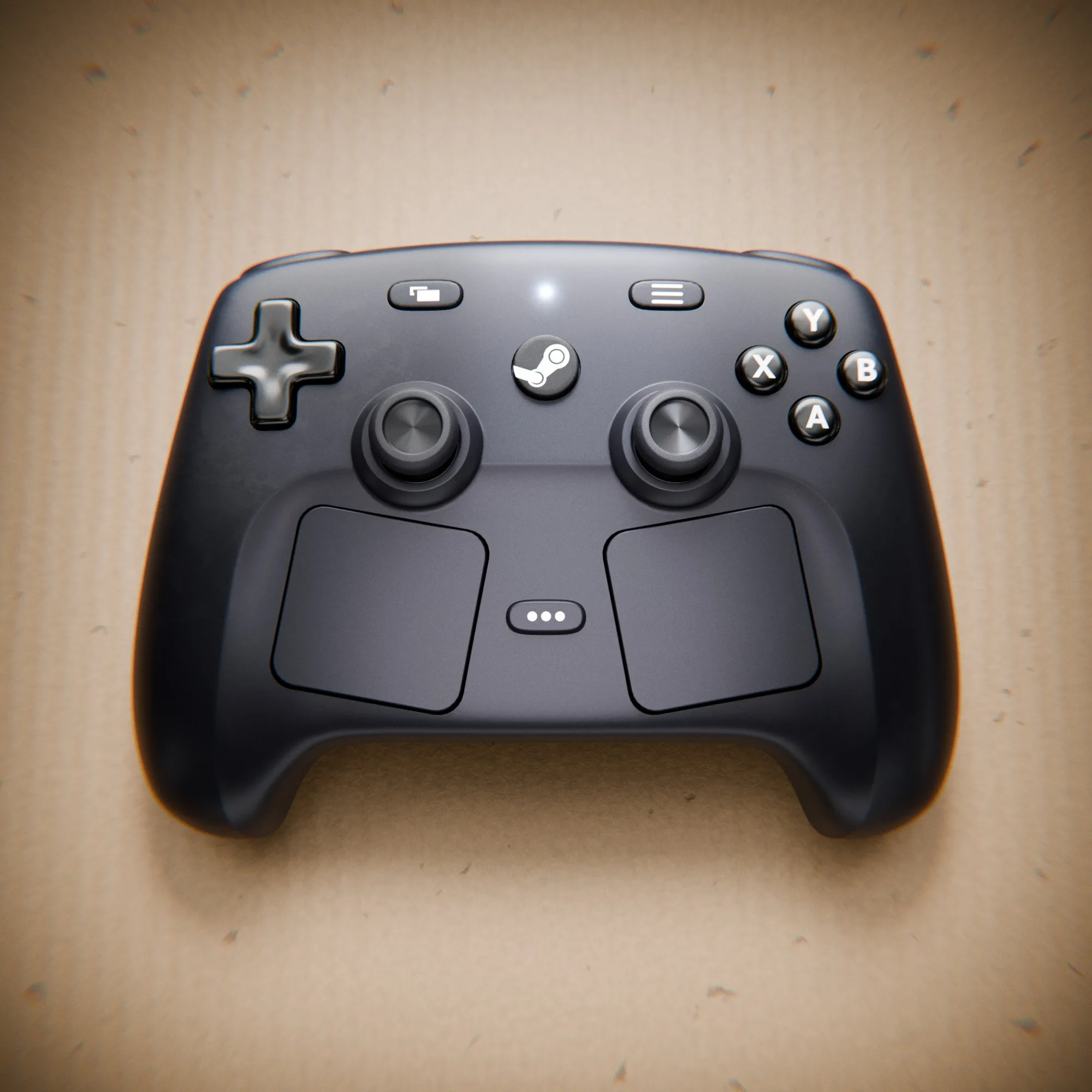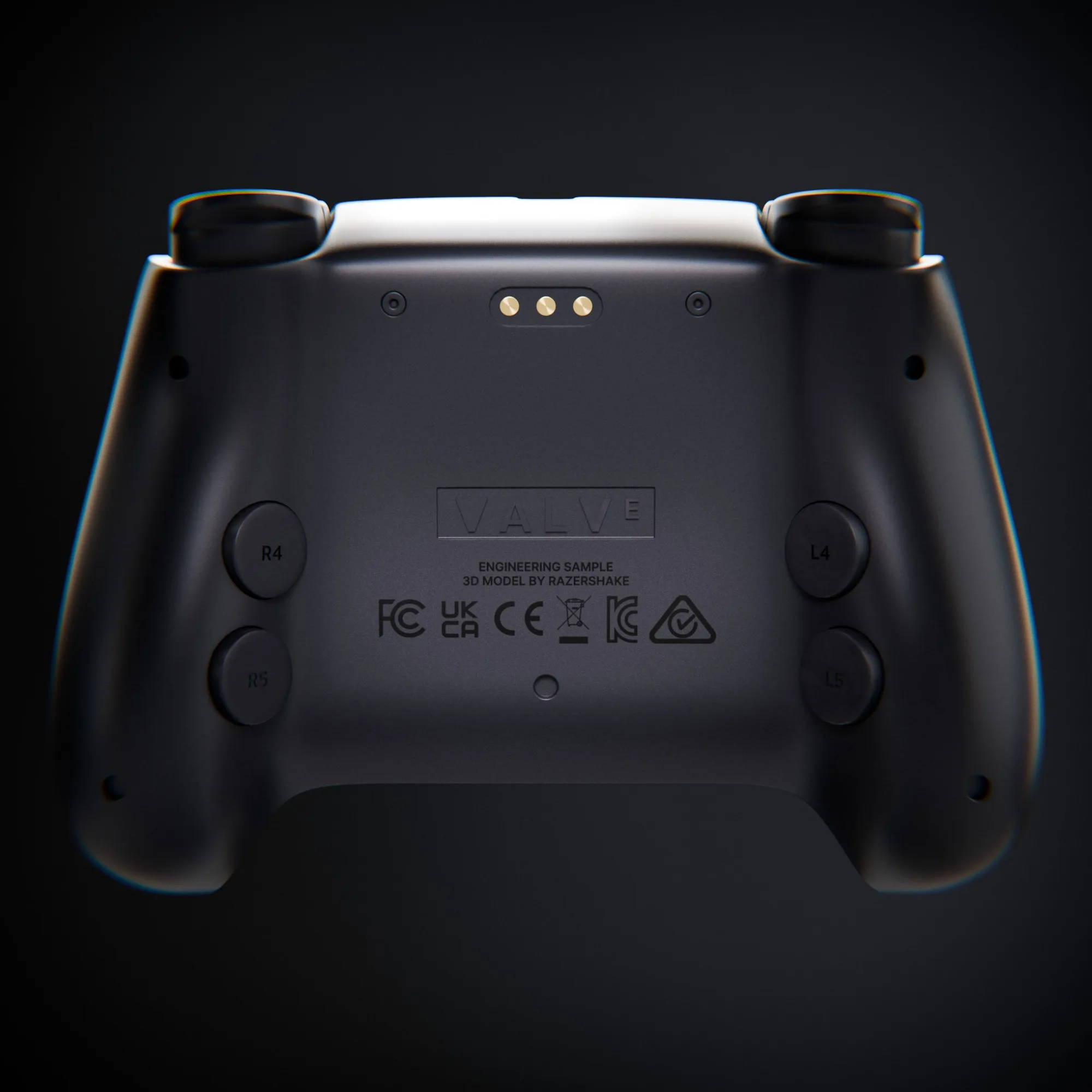
Recreated from trailer footage alone in under 48 hours
Steam Controller - Speed Challenge
When Valve announced the Steam Controller, no physical unit existed yet - only trailer footage and promo images. I set myself a challenge: recreate it entirely from reference, at photorealistic quality, in under two days. The result was mistaken for the actual product by thousands of people.
No CAD, no measurements, no physical reference
The controller had been announced but not shipped. Only a 2D trailer and a handful of promotional screenshots existed. I had to infer proportions, depth, button placement, material finishes, and ergonomic curves purely from visual reference - no CAD data, no blueprints, no physical unit to measure.
Every angle had to be reconstructed from limited views. A single misinterpreted perspective could throw the entire model off.
Pure Blender hard-surface workflow
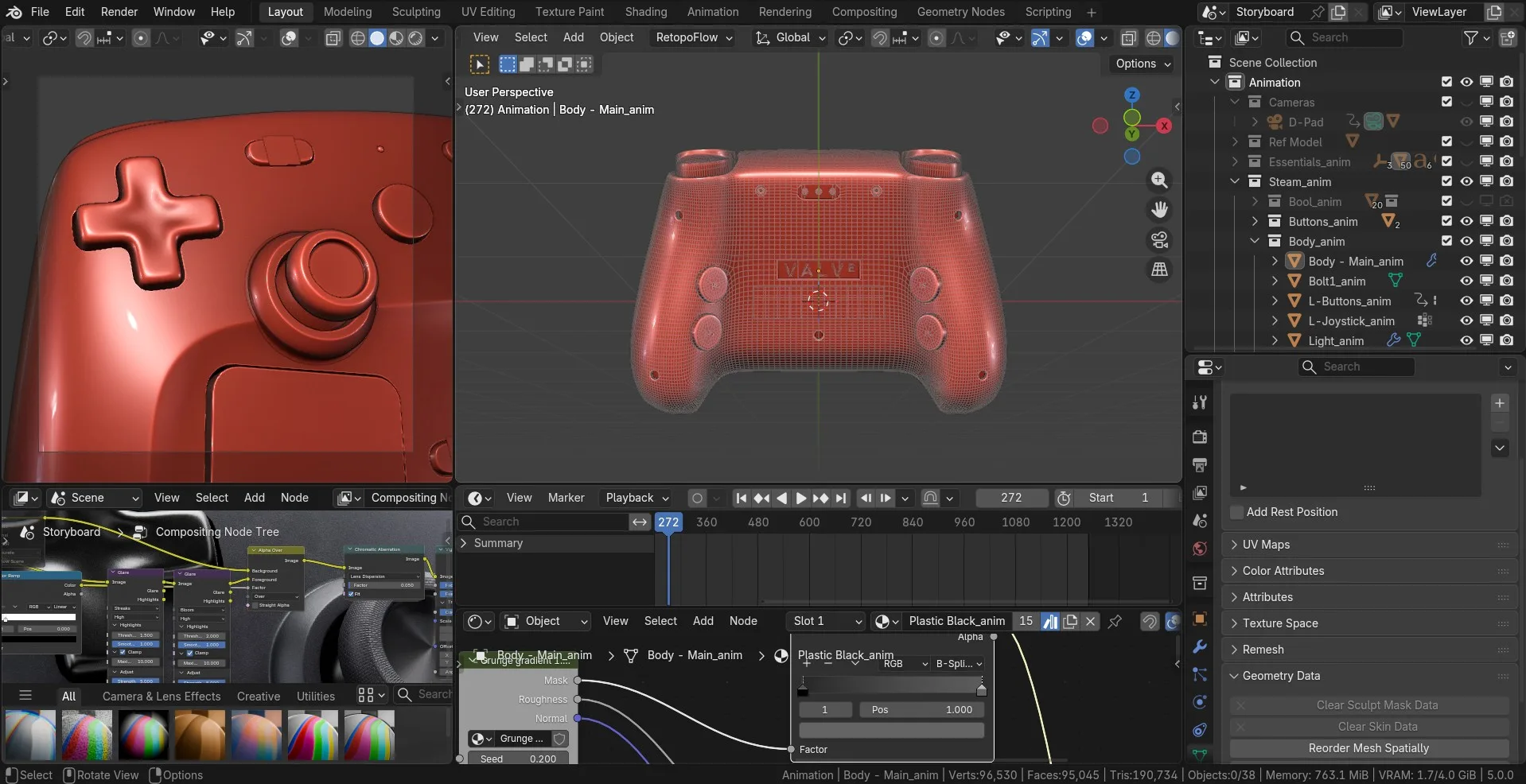
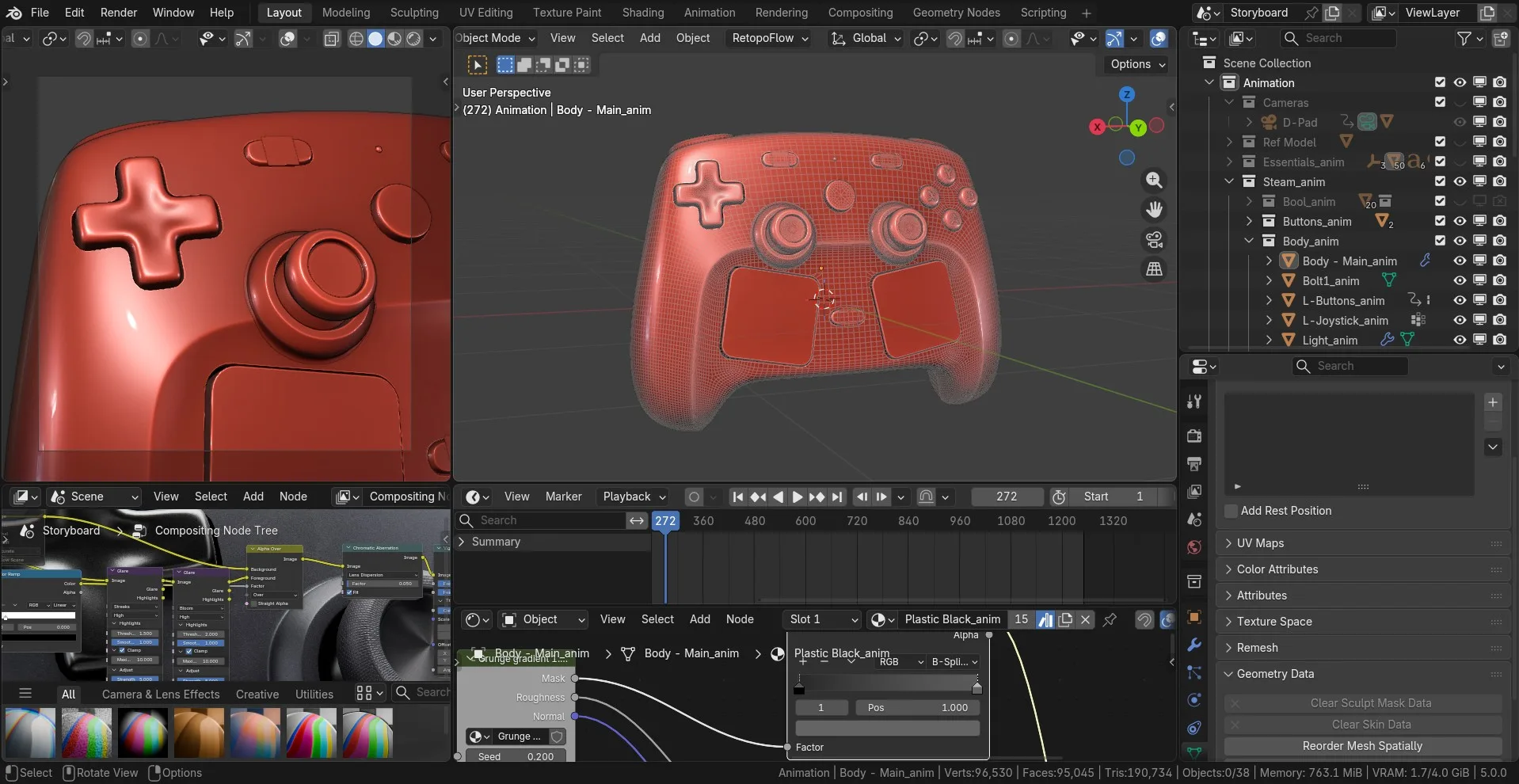
No shortcuts, no photogrammetry - just reference images pinned to the screen and a Blender hard-surface workflow from scratch.
Day 1 was pure modeling: blocking out the main body, then layering in every detail - thumbsticks, D-pad, face buttons, triggers, grip contours, the touchpad surfaces, the Steam button, the LED indicator. Every component was modeled separately for accuracy.
Day 2 was shading, lighting, and rendering. I set up a studio-style HDRI environment, assigned PBR materials (soft-touch plastic for the grips, glossy finish for the face, matte for the buttons), and dialled in the lighting until it matched the tone of the official promo material.
60,000+ people thought it was the real thing
Posted the final render to Reddit. The response was immediate - and unexpected. Thousands of comments from people asking where to buy it, how much it costs, and when it ships. I had to clarify in every thread that it was a 3D model, not a photograph.
The post accumulated 60,000+ views across multiple subreddits. No ads, no promotion - just the model speaking for itself.
This project validated something important: at this level of fidelity, the line between rendering and photography disappears. If you can make something that people mistake for a manufactured product, you can make a configurator that sells it.
Key Takeaways
Process & Breakdown
Final Render