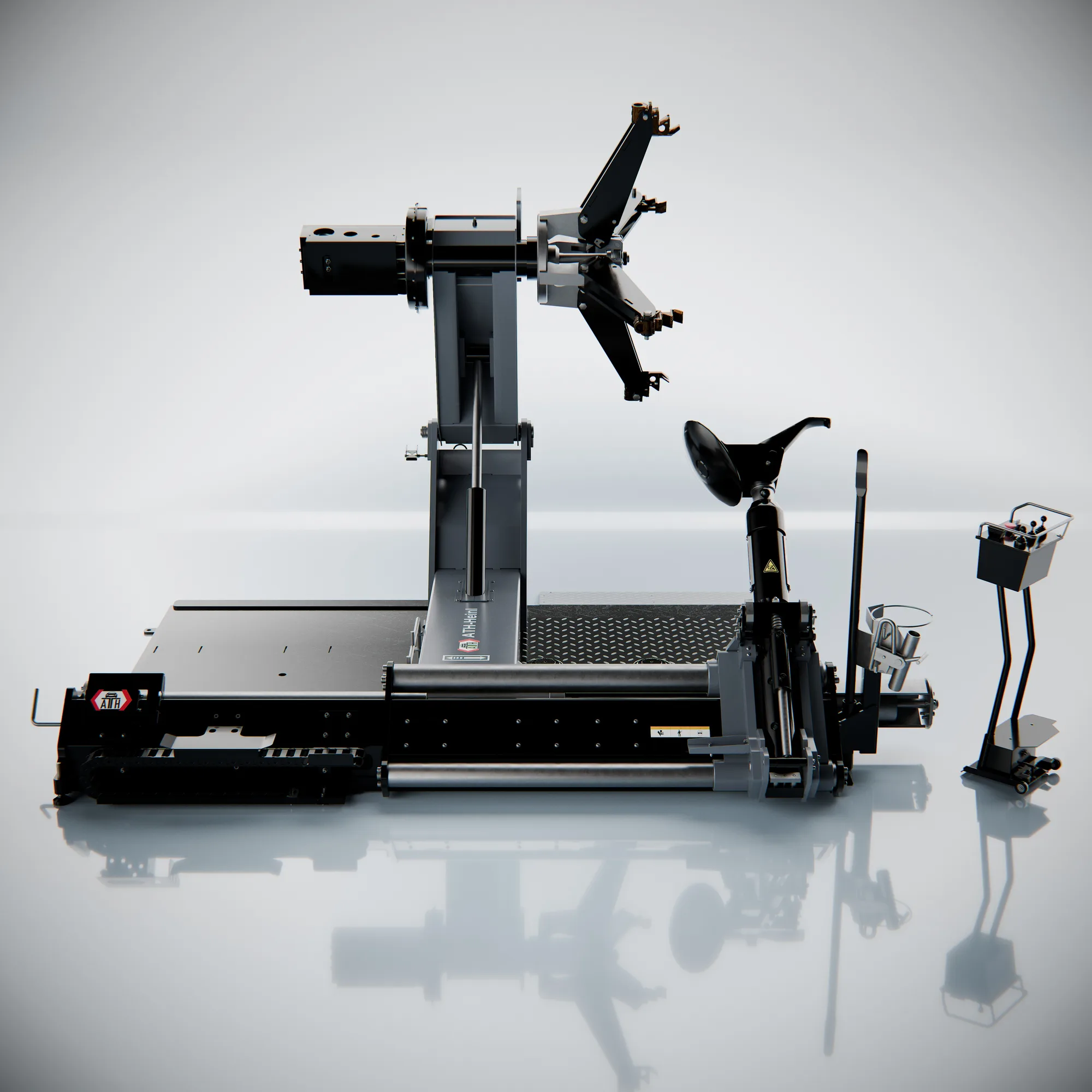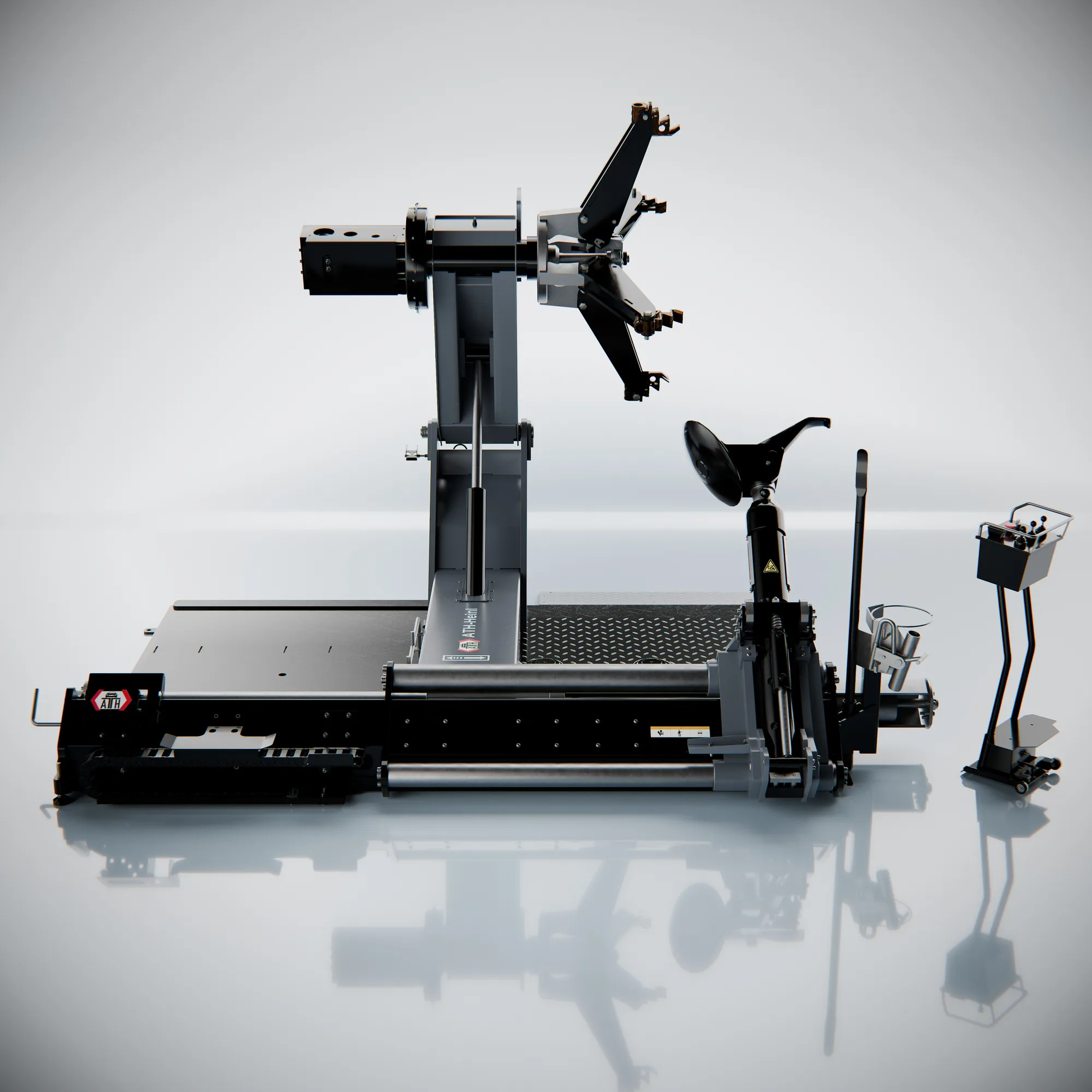
CAD to game-ready configurator at 1:1 precision
ATH Heinl 7260 - Industrial Machinery
ATH Heinl manufactures heavy-duty automotive service equipment - tyre changers and vehicle lifts used by workshops across Europe. They needed high-fidelity 3D models for an interactive web configurator. The source files were CAD data - millions of polygons, no topology, no UVs. I rebuilt them from the ground up.
50 MB of CAD data, zero web-ready geometry
The source files came straight from engineering - precise to the micron, but completely unusable for real-time rendering. Millions of polygons, no edge flow, no UV coordinates, no materials. Every bolt, screw, panel, and mechanism existed as raw CAD nurbs or dense meshes.
The configurator needed models under 10 MB that loaded in under 3 seconds. And they had to look indistinguishable from the real machine - industrial buyers would not tolerate a "video game" appearance.
Full retopology + PBR texturing at 1:1 scale
Two machines were built: the Comfort Lift 2.40 (a two-post vehicle lift) and the 7260 Truck Tyre Changer. Each followed the same pipeline.
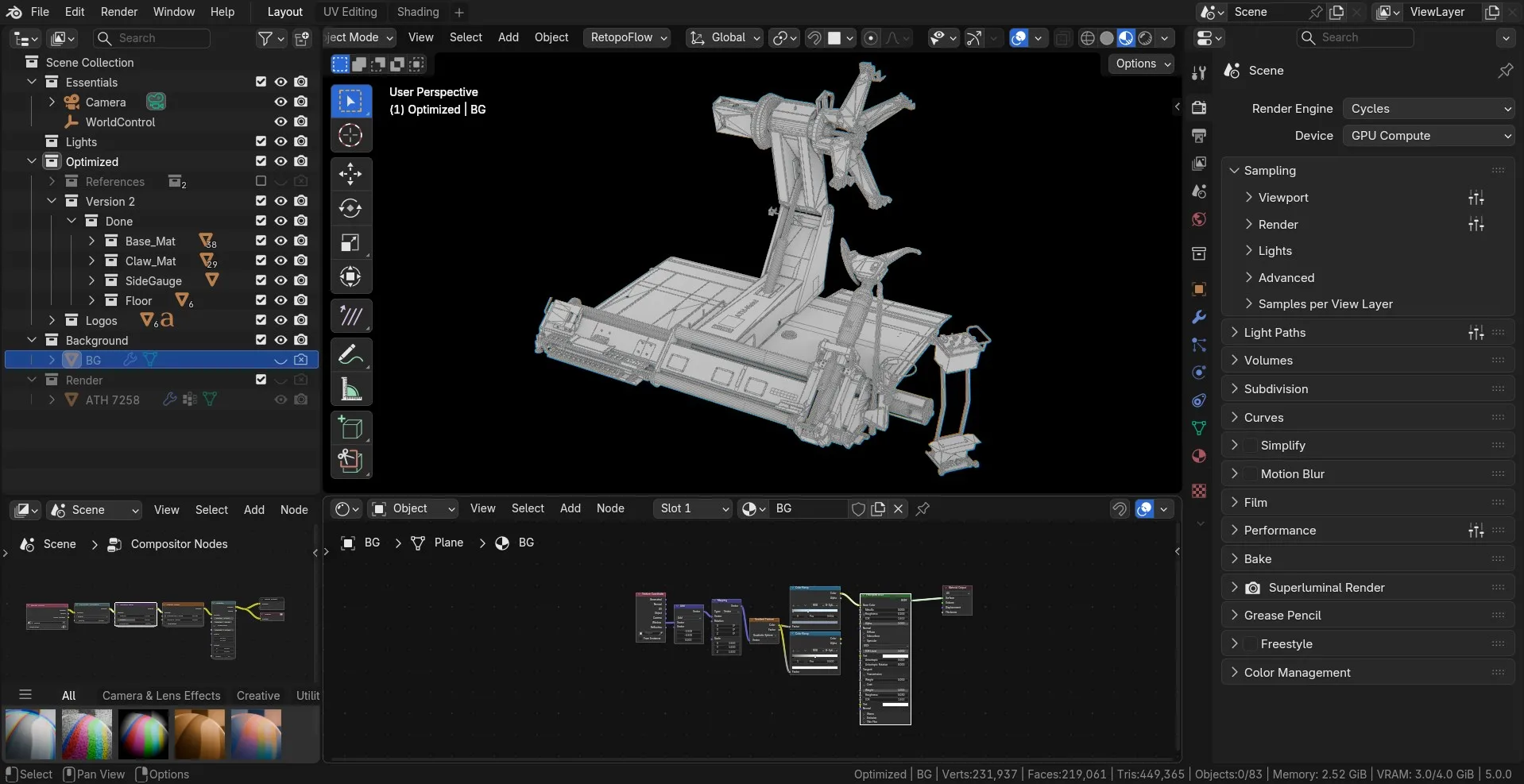
Retopology - every surface was rebuilt by hand with clean quad flow. Mechanical edges got sharp bevels. Large flat panels got minimal geometry. The goal was game-ready topology that still looked machined, not melted.
UV mapping - careful layout to maximise texel density on visible surfaces while keeping the overall texture budget under control.
PBR texturing - Substance Painter for the materials. Each machine got custom smart materials for the different finishes: powder-coated steel, bare cast iron, rubber grips, hydraulic hoses, control panels with printed labels.
Optimization - texture baking and channel packing compressed everything down from the 50 MB+ source files to lightweight WebGL-ready assets.
Deployed in a live configurator, indistinguishable from photos
Both models shipped in a production web configurator. The 7260 Tyre Changer took two weeks from start to finish - the most complex single model I'd built up to that point.
The Comfort Lift was faster - the pipeline from the first machine meant the second moved at nearly double the speed.
Clients couldn't tell the difference between the configurator render and photographs of the physical equipment. That was the entire point.
Key Takeaways
Final Render